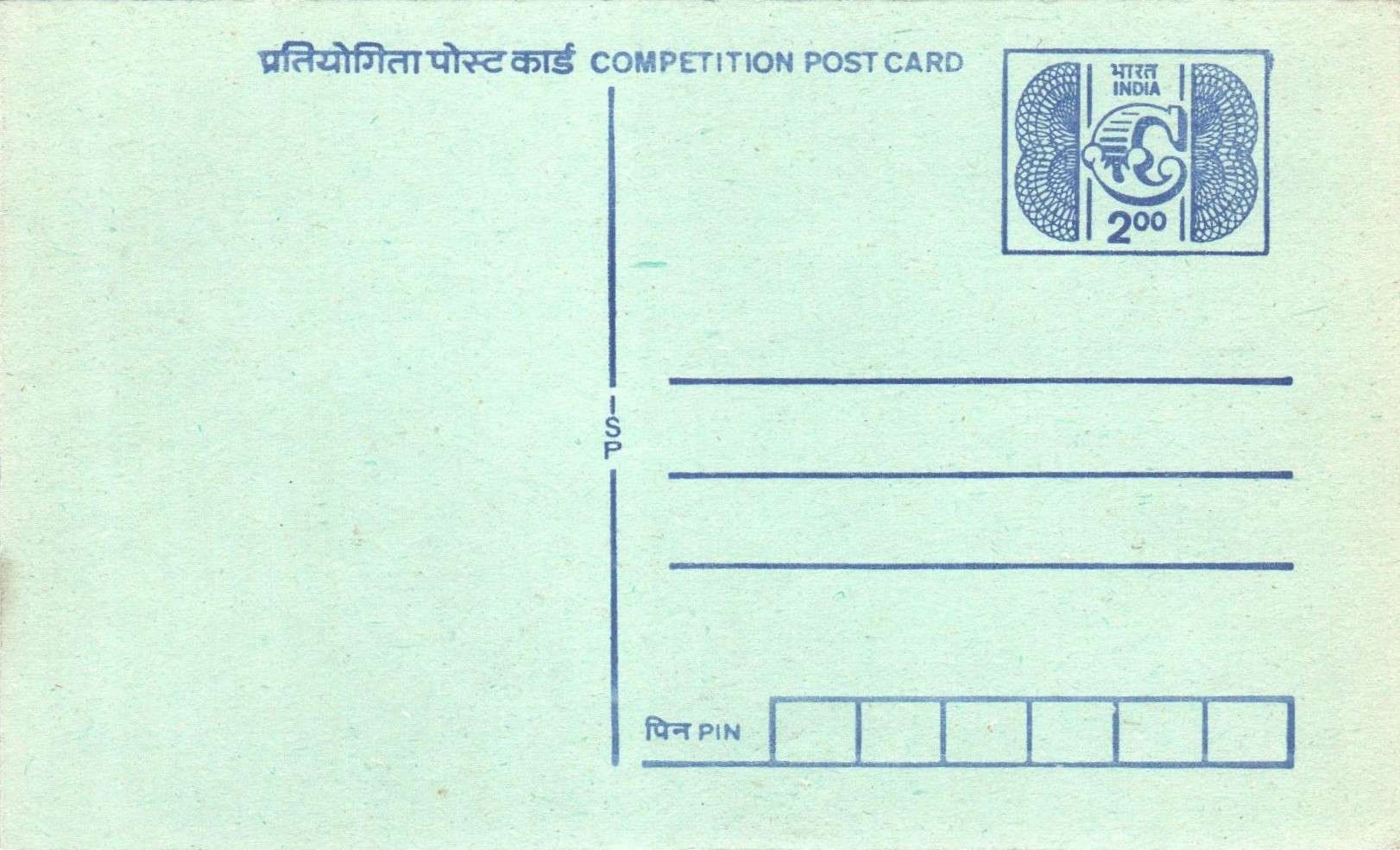
1996 Nov 14: 200, ISP,
Issued in strips of 4
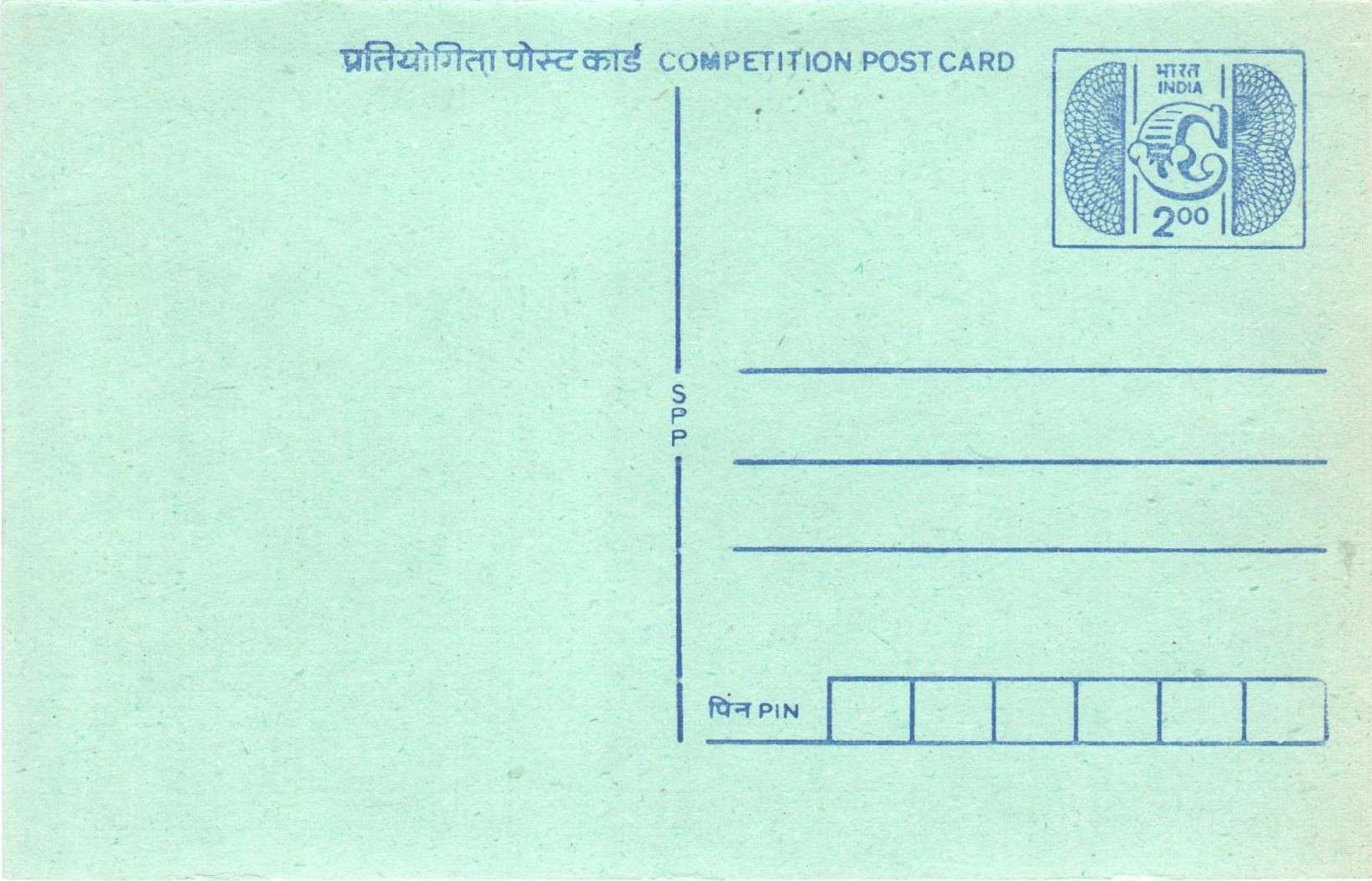
1996 Nov 14: 200, SPP
Issued in sheets of 8
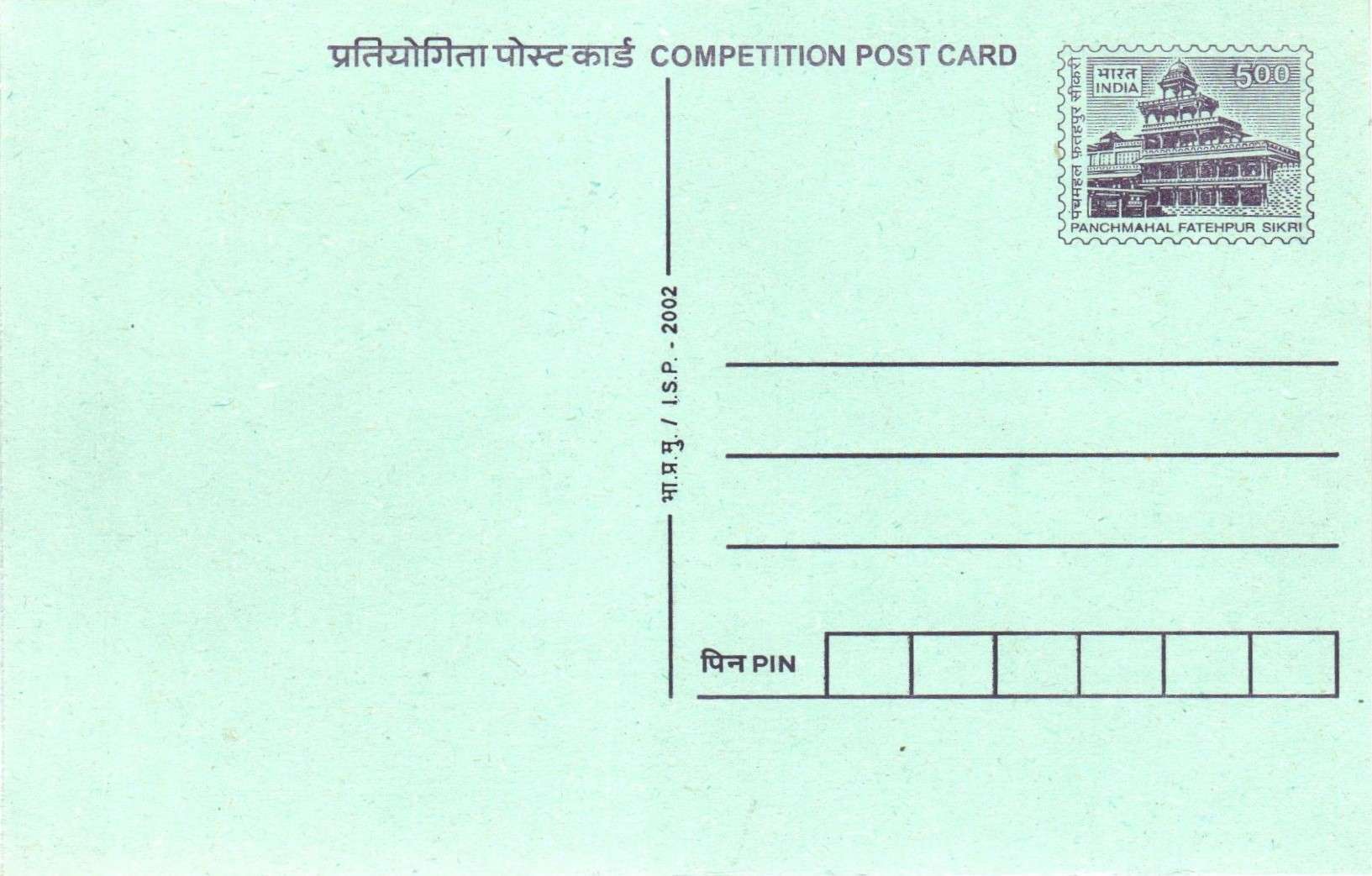
2002 Jan 1: 500, Panchmahal - Fatehpur Sikri, Brown, ISP 2002
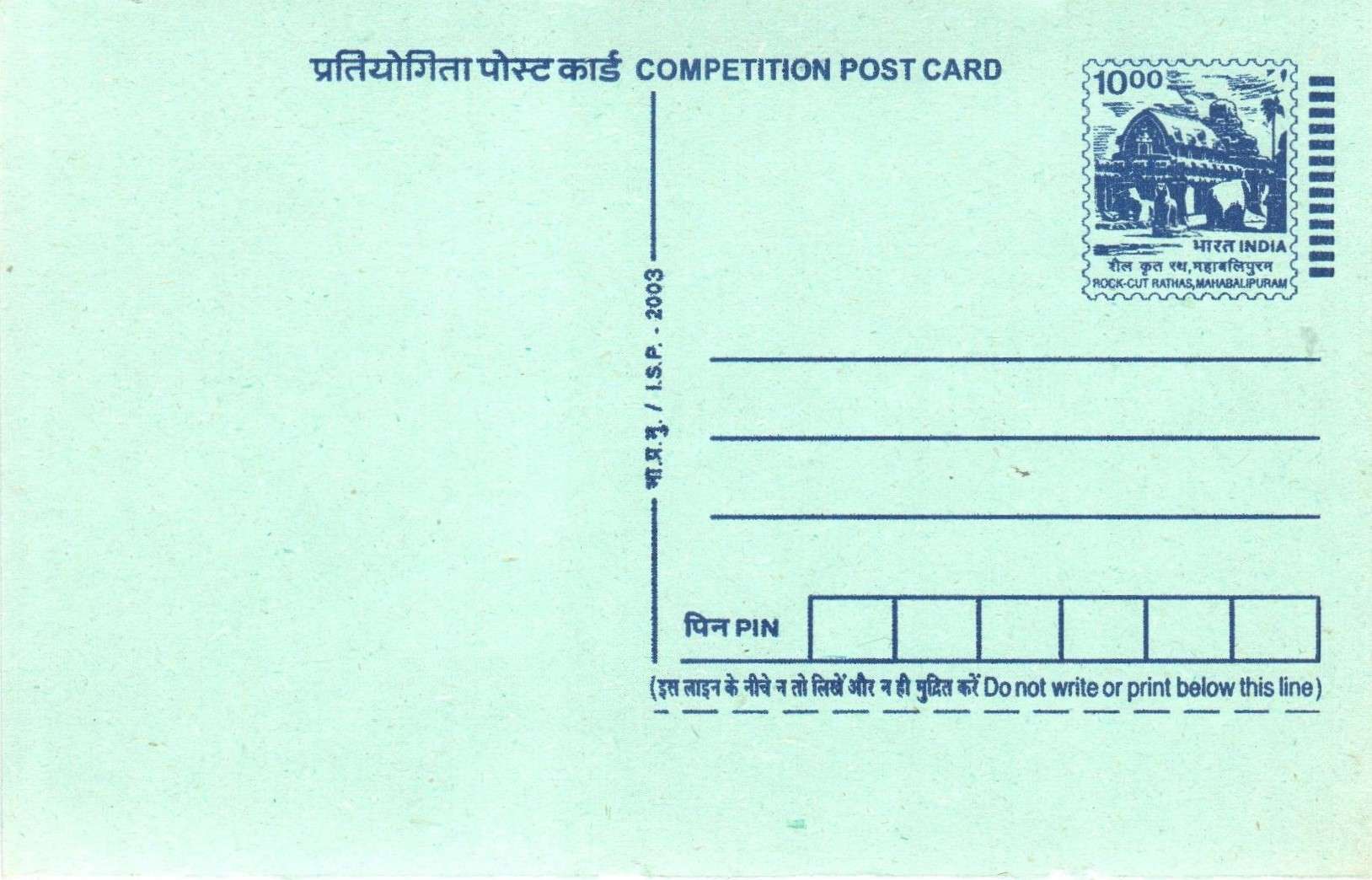
2003 Mar 1: 1000, Rock cut Chariots - Mahabalipuram, Brown, ISP 2003
Competition Post Card
An Introduction by Madhukar and Savita Jhingan
Competition
Post Cards were introduced on November 14, 1996, at Rs 2 each for entering
competitions run by TV, radio, newspapers or magazines.
In 1993, Doordarshan, the national state
television broadcaster, began airing "Surabhi," a highly popular cultural
magazine programme with a weekly audience quiz. In its first few months,
responses grew from about 4–5 letters to 10–15, then 100–200. After four to five
months, roughly 5,000 letters were arriving, making them difficult to manage.
Opening envelopes and removing letters of varying sizes took considerable time,
so the programme asked viewers to use postcards instead. These were unenclosed,
uniformly sized, stiff and easy to stack. In one week, the programme famously
received over 1.4 million responses—the largest measured audience response in
Indian television history. This surge overwhelmed the postal department.
Processing millions of heavily government-subsidized postcards for commercial
television contests also placed a significant financial burden on India Post.
To limit unintended subsidies for media
contests and help sorting offices manage bulk mail, India Post formally proposed
Competition Post Cards as a separate stationery category in the 1996–97 Union
Budget. Their use became mandatory for competitions run by TV, radio, newspapers
or magazines; entries on ordinary postcards were penalized at double the
deficiency. At Rs 2 each, Competition Post Cards cost far more than the standard
15-paisa postcard and twice the minimum inland letter rate.
By the mid-2000s, however, widespread
mobile phone use, SMS voting, interactive voice response (IVR) telephone systems
and email had replaced physical mail for media contests. Telecom companies also
shared some revenue with programme producers.
By late 2005, printing had ceased, and
discontinuing the cards had been officially recommended.
|
|
|
|
|
| 01.
1996 Nov 14: 200, ISP, Issued in strips of 4 |
01A.
1996 Nov 14: 200, SPP Issued in sheets of 8 |
02.
2002 Jan 1: 500, Panchmahal - Fatehpur Sikri, Brown, ISP 2002 |
03.
2003 Mar 1: 1000, Rock cut Chariots - Mahabalipuram, Brown, ISP 2003 |
Thursday, October 29, 2026